-
 Animal lovers can't help but be fascinated by aardvarks, even if they think it's a little gross that these large animals use their long tongues to slurp up ants and termites. This bilingual book is full of enchanting photographs and interesting facts about these unusual-looking, but very interesting, animals.
 -
 In this informative bilingual book, readers will learn about Abraham Lincoln's life, from his childhood in a log cabin in Illinois to his presidency during the Civil War to his tragic assassination at Ford's Theater. A timeline gives readers a reference point for facts about "Honest Abe." The uncomplicated English to Spanish translation imparts essential biographical data with lessons on perseverance and leadership.
 -
 African buffalo are large and fierce, and they can be very dangerous. This book presents interesting facts in both English and standard Latin-American Spanish about the life and habits of this formidable animal. Readers will be captivated by the book's great photographs, too.
 -
 An introduction to anacondas describes their physical characteristics, life cycle, habitat, and predatory behavior.
 -
 This book introduces bilingual readers to Africa's graceful, sure-footed antelope. From delicate gazelles to large, powerful elands, this nature study discusses the lives and habits of these speedy herbivores. The book includes informative text in both English and standard Latin-American Spanish.
 -
 Introduces the black mamba and describes the physical characteristics, life cycle, habitat, and predatory behavior.
 -
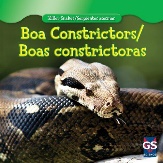 Introduces the boa constrictor and describes their physical characteristics, life cycle, habitat, and predatory behavior.
 -
 Bilingual learners will be thrilled with this outdoor guidebook about bobcats. They are rarely seen in the open, but thousands of these animal hunt throughout much of North America. These powerful predators can take down prey that is much larger than they are. Engaging text in English with standard Latin-American Spanish translation is supported by dramatic, colorful photographs.
 -
 Amazing mountain animals fill the pages of this exciting series. Redesigned with new features, each book invites readers to discover the world of creatures that make their home in high places. Young learners will read about each animals unique physical characteristics, behavior, and adaptations to their environment. Through fascinating facts and brilliant photographs, these books paint a vibrant picture of the incredible array of animal life in the mountains.
 -
 An introduction to diamondback rattlesnakes describes their physical characteristics, life cycle, habitat, and predatory behavior.
 -
 Introduces the flamingo and briefly describes its appearance, habits, diet, and young.
 -
 Introduces the life and accomplishments of George Washington, the first president of the United States.
 -
 Describes the physical characteristics, habitat, and behavior of gorillas, African mammals that live together in groups known as troops, in which they raise their young and groom each other.
 -
 Introduces the hyena and briefly describes its appearance, habits, diet, and young.
 -
 Introduces the jackal and briefly describes its appearance, habits, diet, and young.
 -
 In this riveting bilingual caption book, young naturalists will learn about the group dynamics of a pride of lions. This book is written in English and standard Latin-American Spanish and provides both a fun introduction to these fearsome and fascinating big cats and an opportunity to acquire vocabulary in another language.
 -
 The mysterious lynx is secretive, stealthy, and fierce. Bilingual readers are treated to a fun narrative in English with standard Latin-American Spanish translation about these shy cats that live in North America and Europe. Eye-catching photographs and a picture glossary help build emergent language and reading skills.
 -
 This lively caption book shows young bilingual learners what life is like in a meerkat mob. The meerkats world is described in both English and standard Latin-American Spanish. Colorful photographs reveal the playful side of these fascinating animals as they care for their young, look for food, and stand watch over the mobs burrow.
 -
 Describes the physical characteristics, habitat, hunting and eating habits, and life cycle of ocelots.
 -
 While ostriches cannot fly, they can run faster than 40 miles per hour. Kids will practice their reading in both English and Spanish while learning interesting facts about Earths biggest bird. A helpful picture glossary helps strengthen understanding of new words.
 -
 Even though its smaller than many killer snakes, the death adder is still very dangerous. Readers will soon discover exactly why this snake is so aptly named. Colorful photographs show this venomous snake in action as readers learn exciting facts about how death adders hunt, eat, and survive. Excellent Spanish translations provide engaging support for bilingual learners.
 -
 Introduces pythons, describing their physical characteristics, life cycle, and predatory behavior.
 -
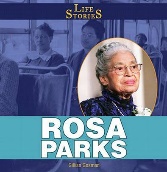 Introduces the life and accomplishments of Rosa Parks, the woman often referred to as "the mother of the civil rights movement."
 -
 Describes the physical characteristics, habitat, eating habits, and life cycle of different types of wild cats.
 -
 Briefly introduces the life cycle of the tulip, from planting a seed or a bulb through the appearance of fields of colorful flowers.
 -
 SIN DESCRIPCIÓN
 -
 Some of the most famous animals in history have been horses. From George Washingtons trusty Arabian, Magnolia, to the fictional stallion Black Beauty, horses have played an important part in historical events, books, television shows, and movies for many years. Readers will discover important facts about some of the worlds most important and beloved horses. Photographs of the horses and their owners help illustrate these amazing and beautiful animals.
 -
 Looks at the life and racing career of NASCAR driver Juan Pablo Montoya.
 -
 Common to all matter and its smallest and most fundamental unit, the atom determines the properties of a substance and how it responds to other materials and stimuli. Dividing the atom further reveals several smaller particles whose activity forms the heart of nuclear physics. Readers will discover the structure of the atom as well as the ways in which its electrons, protons, and neutrons facilitate both radioactivity and nuclear reactions, both of which have been crucial to technological advancements since the 20th century.
 -
Sin stock
 Launching a major new research project examining the principles of succession law in comparative perspective, this book discusses the formalities which the law imposes in order for a person to make a testamentary disposal of property. Among the questions considered are the following. How are wills made? What precisely are the rules - as to the signature of the testator, the use of witnesses, the need for a notary public or lawyer, and so on? Is there is a choice of will-type and, if so, which type is used most often and what are the advantages and disadvantages of each? How common is will-making or do most people die intestate? What happens if formalities are not observed? How can requirements of form be explained and justified? How did the law develop historically, what is the state of the law today, and what are the prospects for the future? The focus is on Europe, and on countries which have been influenced by the European experience. Thus in addition to giving a detailed treatment of the law in Austria, Belgium, England and Wales, France, Germany, Hungary, Italy, the Netherlands, Poland, and Spain, the book explores legal developments in Australia, New Zealand, the United States of America, and in some of the countries of Latin America with a particular emphasis on Brazil. It also includes chapters on two of the mixed jurisdictions - Scotland and South Africa - and on Islamic Law. The book opens with chapters on Roman law and on the early modern law in Europe, thus setting the historical scene as well as anticipating and complementing the accounts of national history which appear in subsequent chapters; and it concludes with an assessment of the overall development of the law in the countries surveyed, and with some wider reflections on the nature and purpose of testamentary formalities.

