-
Sale!Sin stock
 PROMOEl tomo de Cocinas de la serie S.XXI recopila ejemplos reales de cocinas realizadas en melamina. Diseños elegantes, prácticos y funcionales desarrollados por los mejores fabricantes, que se adaptan a cualquier tipo de espacio, aprovechando hasta el último rincón, incluyendo todos los estilos de decoración.
 -
Sale!
 PROMOLos muebles clásicos no pasan de moda, y saber escogerlos y combinarlos permite darle carácter y contraste a las diferentes estancias de la vivienda. Descubra las mejores formas de conseguir resultados espectaculares para decorar espacios que contengan piezas de este estilo.
 -
Sale!
 PROMOEl tomo de Dormitorios de la serie S.XXI recopila los mejores trabajos de las firmas de muebles de estilo moderno más reconocidas internacionalmente. Espectaculares conjuntos y piezas únicas capaces de decorar cualquier espacio.
 -
 El trabajo del Profesor Linares Noci es un estudio, meticuloso y pormenorizado, de un problema jurídico, de solución especialmente compleja, que se presenta cuando, acreedor salarial y acreedor hipotecario, ante la falta de cumplimiento de su deudor común, pretenden la realización de un mismo bien del patrimonio de aquél para, con las resultas de tal ejecución, satisfacer su derecho de crédito anteponiéndose a la pretensión de cobro del otro acreedor concurrente. Situación de conflicto, por el orden de preferencia que ha de satisfacerse uno y otro crédito, que se presenta como consecuencia de la interposición de una tercería de mejor derecho planteada, por uno u otro acreedor, en la ejecución singular instada por alguno de ellos.
 -
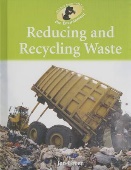 Introduces waste and how it is handled throughout the world; explains how some materials are recycled and reused; and discusses why reducing waste is an important factor in saving the environment.
 -
 Discusses how energy is used, explains the issues behind using fossil fuels for energy, and describes how alternative "clean" energy sources can help the environment.
 -
 NUEVOSILVIA ELORRIAGA RIQUELME
 -
 DIN DESCRIPCION
 -
 Great Expectations is Charles Dickens's thirteenth novel. It is his second novel, after David Copperfield, to be fully narrated in the first person. Great Expectations is a bildungsroman, or a coming-of-age novel, and it is a classic work of Victorian literature. It depicts the growth and personal development of an orphan named Pip. The novel was first published in serial form in Dickens's weekly periodical All the Year Round, from 1 December 1860 to August 1861. In October 1861, Chapman and Hall published the novel in three volumes.Dickens originally intended Great Expectations to be twice as long, but constraints imposed by the management of All the Year Round limited the novel's length. The novel is collected and dense, with a conciseness unusual for Dickens. According to G. K. Chesterton, Dickens penned Great Expectations in "the afternoon of [his] life and fame." It was the penultimate novel Dickens completed, preceding Our Mutual Friend.It is set among the marshes of Kent and in London in the early to mid-1800s. The novel contains some of Dickens most memorable scenes, including its opening, in a graveyard, when the young orphan Pip is accosted by the escaped convict, Abel Magwitch. Great Expectations is a graphic book, full of extreme imagery, poverty, prison ships ("the hulks"), barriers and chains, and fights to the death.Upon its release, Thomas Carlyle spoke of "All that Pip's nonsense." Later, George Bernard Shaw praised the novel as "All of one piece and consistently truthfull." Dickens felt Great Expectations was his best work, calling it "a very fine idea," and was very sensitive to compliments from his friends: "Bulwer, who has been, as I think you know, extraordinarily taken by the book."Great Expectations has a colourful cast that has entered popular culture: the capricious Miss Havisham, the cold and beautiful Estella, Joe the kind and generous blacksmith, the dry and sycophantic Uncle Pumblechook, Mr. Jaggers, Wemmick with his dual personality, and the eloquent and wise friend, Herbert Pocket. Throughout the narrative, typical Dickensian themes emerge: wealth and poverty, love and rejection, and the eventual triumph of good over evil. Great Expectations has become very popular and is now taught as a classic in many English classes. It has been translated into many languages and adapted many times in film and other media.
 -
 This book looks at the business of sports, from ticket sales to merchandising to televised broadcasting.
 -
 Readers learn about real-life case studies involving stem cell research, the sources of stem cells, ethical issues surrounding the use of stem cells, and stem cells' promising possibilities for medical use in bone marrow transplants, treating leukemia, and rebuilding injured organs. Legal issues and rulings around the world are also examined. The volume includes sidebars that provide expert viewpoints on the stem cell research debate, as well as fact boxes and summary boxes that highlight the key points in each chapter.
 -
 Charles Hatfield Baker III, one of the richest men in New York City, suddenly disappears. His daughter, Julia, wants to find him. The directors of his company want power and money. Do they know where he is? And what is Project Omega? Can Julia find her father and save his company?
 -
 Tal y como comenta la protagonista de esta historia: «No me convertí en la Fantástica Chica Invisible de golpe y porrazo. El proceso duró nueve meses, justo el tiempo que tardó el mono en llegar a mi vida. Lo que no me imaginaba es que el nacimiento de mi hermano, además de a él y a mi madre, también me iba a doler a mí. No me gusta ser la Fantástica Chica Invisible. ¡Lo detesto! ¡Quiero volver a ser una discreta y normalita chica visible!».
 -

A veces la gente se siente... no demasiado bien: como una caca. Pero este caso es distinto. Porque nuestra protagonista no es sino... una caca.
Esta es la historia de una caca que no quiso conformarse con su suerte. Al tiempo que desarrolla habilidades asombrosas, irá averiguando cosas de sí misma y de los demás. Y descubrirá que hay una única forma de ser: el cambio.
-
NUEVOISTVANSCH
-
NUEVOVARIOS
-
NUEVOVARIOS
-
NUEVOJUAN MARCOS
-
NUEVOKatia Fach Gómez
-
NUEVOSILVIA SCHUJER
-
NUEVOIÑIGO ARRASATE
-
NUEVOJOSE LUIS OLTRA
-
Sin stock NUEVOMAR ROMERA
-
NUEVONEREA LUIS MINGUEZA
-
 Problemas que pueden presentarse en la determinación y entendimiento de algunas cláusulas testamentarias concretas. Criterios generales sobre interpretación de los testamentos