-
 Describes the different climates around the world, from tropical to cyclonic and polar, discusses how they affect the environment, and explains the potential dangers of climate change.
 -
 Describes the different types of homes that insects construct, including nests, tunnels, mounds, and hives
 -
 Presents an introduction to rocks, discussing how they are formed, where they are found, and how to start a rock collection.
 -
 SIN DESCRIPCION
 -
 Describes what it is like to be in the movie industry, discussing film genres, screenwriters, cinematographers, designers, actors, animation, and film awards.
 -
 Describes what it is like to be a race car driver, discussing different types of races, pit stops, race car safety, meeting fans, doing charity work, and the Daytona 500.
 -
 Describes what it is like to be a baseball player, discussing spring training, pitching, hitting home runs, the World Series, meeting fans, doing charity work, endorsing products, and managing a team.
 -
 Being responsible means you can be trusted to do important things without being told. Sometimes, it might seem hard to be responsible or to discern the right path independently. This motivating guidebook explains just how easy being responsible can be at home, school, and around the neighborhood.
 -
 What does it mean to be a good citizen? It means being helpful and following the rules. Readers discover that they can do their part to make their communities better one small action at a time. Colorful photographs show kids being the best citizens they can be at school, at home, and with their friends.
 -
 Discusses the extent and effects of human trafficking, the term that is used today for modern-day slavery, which takes place in almost every country in the world.
 -
 Describes globalization, including how it works, its positive and negative effects, and its relationship with world immigration.
 -
 SIN DESCRIPCION
 -
 Introduces credit cards and discusses their advantages and disadvantages.
 -
 Introduces banks, including the different types, their function, and why they are important to both investors and the common public.
 -
 Gymnasts are among the strongest athletes in the world. They leap, tumble, flip, and fly through the air with finesse. Readers interested in gymnastics will discover what it takes to become a gymnast, as well as the different gymnastic events they can participate in. Photographs of gymnasts and gymnastic apparatuses show readers what its like to join the team.
 -
 Greenland is more than 84, square miles. The worlds largest island also has many other extraordinary qualities that make learning about this island fun and exciting. The unique way of life in Greenland as well as the variety of animals on the island will fascinate young readers.
 -
 Great Expectations is Charles Dickens's thirteenth novel. It is his second novel, after David Copperfield, to be fully narrated in the first person. Great Expectations is a bildungsroman, or a coming-of-age novel, and it is a classic work of Victorian literature. It depicts the growth and personal development of an orphan named Pip. The novel was first published in serial form in Dickens's weekly periodical All the Year Round, from 1 December 1860 to August 1861. In October 1861, Chapman and Hall published the novel in three volumes.Dickens originally intended Great Expectations to be twice as long, but constraints imposed by the management of All the Year Round limited the novel's length. The novel is collected and dense, with a conciseness unusual for Dickens. According to G. K. Chesterton, Dickens penned Great Expectations in "the afternoon of [his] life and fame." It was the penultimate novel Dickens completed, preceding Our Mutual Friend.It is set among the marshes of Kent and in London in the early to mid-1800s. The novel contains some of Dickens most memorable scenes, including its opening, in a graveyard, when the young orphan Pip is accosted by the escaped convict, Abel Magwitch. Great Expectations is a graphic book, full of extreme imagery, poverty, prison ships ("the hulks"), barriers and chains, and fights to the death.Upon its release, Thomas Carlyle spoke of "All that Pip's nonsense." Later, George Bernard Shaw praised the novel as "All of one piece and consistently truthfull." Dickens felt Great Expectations was his best work, calling it "a very fine idea," and was very sensitive to compliments from his friends: "Bulwer, who has been, as I think you know, extraordinarily taken by the book."Great Expectations has a colourful cast that has entered popular culture: the capricious Miss Havisham, the cold and beautiful Estella, Joe the kind and generous blacksmith, the dry and sycophantic Uncle Pumblechook, Mr. Jaggers, Wemmick with his dual personality, and the eloquent and wise friend, Herbert Pocket. Throughout the narrative, typical Dickensian themes emerge: wealth and poverty, love and rejection, and the eventual triumph of good over evil. Great Expectations has become very popular and is now taught as a classic in many English classes. It has been translated into many languages and adapted many times in film and other media.
 -
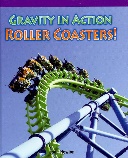 Nothing can capture attention like the thrill and rush of roller coasters. Your students will learn how the force of gravity makes their favorite roaring rollers move.
 -
 Since the terrible events of 9/11, more attention than ever has been paid to the threats and challenges posed by terrorists. Weinberg explains who the terrorists are, where they came from, what motivates them, and what, if anything, can be done to stop them. It provides a fascinating insight into how terrorist 'cells' operate and what they might do in the future. Leonard Weinberg is Foundation Professor of Political Science at the University of Nevada. He has also served as a consultant to the United Nations Office for the Prevention of Terrorism and was a recipient of the 1999 Thornton Peace Prize.
 -
 Introduces genetically modified foods, describing current research, health concerns, and their effect on modern agriculture.
 -
 This explanatory volume shows readers where their sweet and crunchy apples come from. Every step, from farm to table, is explained in accessible language and accompanied by vibrant photographs.
 -
 Introduces the fundamentals of energy, including its different forms, how it is stored, and how people use it.
 -
 Introduces some of the animals that live in American temperate forests and tropical rain forests, including such creatures as the black bear, great horned owl, garter snake, Hawaiian honeycreeper, and coqui frog.
 -
 Tacos, enchiladas, tortillas, and even huevos rancheros are not unusual items in many American restaurants. Mexican food is loved all over the world, but Mexicos kitchens hold much more than these dishes. Some surprising ingredients and fascinating cultural facts are in store for readers and fledgling chefs. Mexicans use prickly pear cactus, plantains, and even chocolate in their meals. A salsa recipe at the end of the book gives young cooks a chance to create their own fiesta!
 -
 Some of the most famous animals in history have been horses. From George Washingtons trusty Arabian, Magnolia, to the fictional stallion Black Beauty, horses have played an important part in historical events, books, television shows, and movies for many years. Readers will discover important facts about some of the worlds most important and beloved horses. Photographs of the horses and their owners help illustrate these amazing and beautiful animals.
 -
 Discover Earth's amazing peninsulas in this fun and informative book. Readers will learn about the formation of peninsulas, learn about different kinds, and explore some of the world's most famous peninsulas. Stunning photography captures the natural beauty and life on this landform.
 -
 Describes the formation, flora and fauna, and geography of the world's mountains, including the Rockies and Mount Everest.
 -
 Describes the formation of islands and the development and variety of plant and animal life on different islands.
 -
 Introduces glaciers, describing their formation, geography, and effects on the surrounding land and people.
 -
 Introduces caves, describing their characteristics, different types, and the animals that live in them.
 -
 Explains what canyons are, how they are formed, and where they can be found around the world.
 -
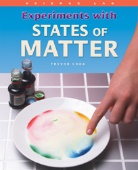 Kids will learn all about solids, liquids and gases through these fun and easy-to-follow experiments.
 -
 Kids will learn all about plants through these fun and easy-to-follow experiments.
 -
 Kids will learn all about light and sound through these fun and easy-to-follow experiments.
 -
 Kids will learn all about heat through these fun and easy-to-follow experiments.
 -
 Kids will learn all about forces through these fun and easy-to-follow experiments.
 -
 Kids will learn all about electricity and magnetism through these fun and easy-to-follow experiments.
 -
 The world's wildlife is vanishing at an alarming rate. Scientists at the Nature Conservancy and the World Wildlife Federation estimate that one in four mammals, and a full third of Earth's amphibians are in danger of becoming extinct. Today species are becoming extinct at a rate that is anywhere from 100 to 1,000 times faster than normal. People have been in fierce competition with wild animals for land, food, and natural resources for years. When over-hunting and -fishing of species and a rise in the level of pollution is added to this mix, humans come to represent the single gravest threat to wildlife survival. Any species that disappears leaves a hole in the web of life. Mass extinction would leave so many holes that the web might totally fall apart. Humans must realize the important role wildlife plays in the survival of the planet and reverse the damage--before it's too late.
 -
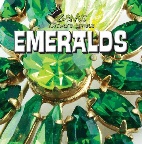 Emeralds are the most expensive gems in the world, but it takes a lot of time and effort for them to get that way. Readers will discover many interesting facts about this beautiful May birthstone that takes millions of years to form. Vibrant photographs capture emeralds at all stages, from the mines to beautiful pieces of jewelry.
 -
 Doctors Without Borders provides medical attention to those in need. This remarkable organization has even won a Nobel Peace Prize for its services. Students will be inspired as they read about the good deeds of this organization.
 -
 There are many different types of diamonds in the world. They come in a range of colors and can be cut into all kinds of shapes. This book shows readers that the way these different kinds of diamonds are created really isn't that different at all. Interesting facts and detailed photographs explain where these gems come from, how they're made into jewelry, and what makes them so valuable.
 -
 Kids will learn all about desert plants, creatures, and much more in this fact-filled book about deserts.
 -
 Some of the most important contributors to the food chain are those creatures that help break things down: decomposers. If not for these birds, bugs, and worms organic matter couldn't be recycled back into nature. Readers will discover the different kinds of decomposers, how they do their job, and why it is so important. This fascinating book includes graphic organizers and annotated illustrations to better explain the food chain.
 -
 Amazing mountain animals fill the pages of this exciting series. Redesigned with new features, each book invites readers to discover the world of creatures that make their home in high places. Young learners will read about each animals unique physical characteristics, behavior, and adaptations to their environment. Through fascinating facts and brilliant photographs, these books paint a vibrant picture of the incredible array of animal life in the mountains.
 -
 The Internet brought about a total revolution in the world of information. Today, anyone with an Internet connection can access a wealth of information online. As our access to data increases, copyright laws struggle to keep up. This book examines how copyright law has been applied to online content, the emerging open source movement, fair use, proper citation practice, and the ethics of using and citing online information. It is an invaluable resource for today's students.
 -
 SIN DESCRIPCION
 -
 This is a well-organized look as coastal regions: what shapes them, some environmental threats, and their usefulness in industry and tourism. Several beautiful and interesting coastlines are highlighted, including Cancun and the Great Barrier Reef. Readers will learn about each coastline's location, population, local industries, and environmental threats.
 -
 Curious readers will discover how the world's climate is changing from the greenhouse effect and the ozone hole, and what we are doing to help our planet.
 -
 Chemistry is often a daunting subject for students, fostering a bewilderment that sets in upon their first encounter with the Periodic Table. This book demystifies an important aspect of the subject--chemical reactions--and demonstrates exactly how fascinating and fun chemistry can be. Starting out by explaining just what a chemical reaction is--and what it isn't--the book details in accessible language the various kinds of chemical reactions that are possible. It draws upon readily comprehensible everyday examples, like rusting metal, baking bread, battery power, digestion, rotting eggs, and burning candles. The book then turns to a survey of the history of chemical research, beginning in the Ancient and Classical Worlds, progressing to the Medieval alchemists and Renaissance innovators, and ending with the leading lights of modern chemistry. Readers will be introduced to luminaries such as Antoine Lavoisier, John Dalton, Louis Pasteur, Dmitri Mendeleyev, the Curies, and Ernest Rutherford. It concludes with an inspiring examination of how current research and cutting edge developments are using chemistry and chemical reactions to save lives and insure continued life on Earth. This book amply illustrates the accessibility, relevance, and gee-whiz fun of chemical reactions.
 -
 The spread of harmful chemicals and biological organisms can injure and kill thousands of people and make an infected area unlivable for some time to come. In the age of modern terrorism, many people fear militant organizations will unleash chemical and biological weapons in public places. This book provides readers with an overview of what these weapons are, who uses them and why, and explains how much of a threat they are to our way of life. Over time, countries have pledged to ban the use of CBWs in various agreements, with limited success.
 -
 When Henry Ford put an engine on a horse carriage, he had no idea that his simple invention would revolutionize the world. Read about how an everyday part of our lives started with a single, simple concept.
 -
 Imagine traveling at half the speed of a jet plane without ever leaving the ground! Students will discover the technology that makes such speeds possible, from special tracks and safety precautions to aerodynamically designed trains. What are the limits to the speed of trains? What imposes those limits? Students also will read about the future of passenger train travel, from flying trains to trains that use huge magnets to levitate inches or centimeters off the track. Some trains safely reach speeds of more than 200 mph!
 -
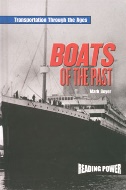 Humans have used boats for hundreds of years. See how boats have changed into the mighty ocean-going vessels we use today.
 -
 This book explains the latest scientific thought behind biodiversity and why a variety of species on our planet is essential. Further, the author explains recent efforts to preserve our world by curbing global warming.
 -
 Did you know that riders had to use stepstools to get onto the first bikes? Bicycles were once regarded as a nuisance to horses. Read about how they've become a significant part of our lives.
 -
Sin stock
 Luis loves to read, but soon his house in Colombia is so full of books there's barely room for the family. What to do? Then he comes up with the perfect solution: a traveling library! He buys two donkeys, Alfa and Beto, and travels with them throughout the land, bringing books and reading to the children in faraway villages. Beautiful!
 -
 The detailed illustrations and photographs in this fascinating book take us into the complicated, hectic world of the beehive, where we observe the rigidly structured "class system" of the honeybee, with its worker bees, drones, and queen. The complex body and internal systems of the bee are examined, as the history, honey production, construction of the honeycomb, reproduction, and colony building are discussed.
 -
 As the world's population expands, so too does the risk of communicable disease and global pandemics. Consequently, healthcare has assumed a greater centrality in the public consciousness both in the United States and around the world. With various national and international organizations dedicated to epidemiological research and disease control, societal welfare has become an increasingly significant aspect of public policy. The historical, legal, and scientific factors that form the basis of public health locally and globally are the subjects of this relevant and revealing volume.
 -
 SIN DESCRIPCION
 -
 The largest continent in the world also has the largest variety of people, land, and animals of any continent on Earth. Students will be delighted with the beautiful images as they read about this bountiful continent.
