-
 Beautifully illustrated picture books give you a look at our world from a small child's point of view.
 -
 Open a world of possible, real stories about the joy and power of reading.
 -
Sale!
 PROMOPHAIDON DESIGN CLASSICS is the first comprehensive and authoritative collection of classic design objects. This beautifully illustrated three-volume set of books presents 999 industrially manufactured products, carefully selected by a group of experts. It is the first definitive illustrated sourcebook on the evolution of design to include such a wide scope of objects in detail. From cars to furniture, from tableware to cameras, from everyday objects to airplanes, this breadth of design has never before been collected in such a way before. PHAIDON DESIGN CLASSICS tells the story of design’s evolution around the world from the late 1600's to the present, bringing together patents, prototypes, old advertisements, original drawings, images showing the process of manufacturing, as well as rare archival photographs. The anthology features an astonishing 4,000 images. The objects are presented chronologically, beginning with an elegant pair of Chinese bonsai scissors from the early 1600s, still in production today, and ending with Barber Osgerby’s Lunar bath accessories, destined to become a classic. Glancing through the volumes, the reader will gain an understanding not only of the history of design, but a history of taste and culture. The book is an extraordinary journey through the objects that have shaped our society, from the first attempts to combine function and beauty in the nineteenth century, through the machine aesthetics of the thirties, the advent of plastic and other new materials in the fifties and sixties, up to the classics-to-be of the last ten years.
 -
 SIN DESCRIPCION
 -
 Charles Hatfield Baker III, one of the richest men in New York City, suddenly disappears. His daughter, Julia, wants to find him. The directors of his company want power and money. Do they know where he is? And what is Project Omega? Can Julia find her father and save his company?
 -
 Describes the design, construction, and operation of famous skyscrapers.
 -
 This book will give students an understanding of the history of flight right up to the technology and scientific discoveries that allow us to fly planes as large as todays super jumbo jets. How are airplanes designed so they can operate safely? What is the future of flight? All of these questions and more will be answered as students take a look at super jumbo jets, inside and out!
 -
 Discusses supersonic jets, including how they are built, different types, and what they are used for.
 -
Sin stock
 Launching a major new research project examining the principles of succession law in comparative perspective, this book discusses the formalities which the law imposes in order for a person to make a testamentary disposal of property. Among the questions considered are the following. How are wills made? What precisely are the rules - as to the signature of the testator, the use of witnesses, the need for a notary public or lawyer, and so on? Is there is a choice of will-type and, if so, which type is used most often and what are the advantages and disadvantages of each? How common is will-making or do most people die intestate? What happens if formalities are not observed? How can requirements of form be explained and justified? How did the law develop historically, what is the state of the law today, and what are the prospects for the future? The focus is on Europe, and on countries which have been influenced by the European experience. Thus in addition to giving a detailed treatment of the law in Austria, Belgium, England and Wales, France, Germany, Hungary, Italy, the Netherlands, Poland, and Spain, the book explores legal developments in Australia, New Zealand, the United States of America, and in some of the countries of Latin America with a particular emphasis on Brazil. It also includes chapters on two of the mixed jurisdictions - Scotland and South Africa - and on Islamic Law. The book opens with chapters on Roman law and on the early modern law in Europe, thus setting the historical scene as well as anticipating and complementing the accounts of national history which appear in subsequent chapters; and it concludes with an assessment of the overall development of the law in the countries surveyed, and with some wider reflections on the nature and purpose of testamentary formalities.
 -
 Photographs and text reveal information about the longest bridge in the world, including its location, how it was built, and the safety issues involved in its upkeep.
 -
 Classic / British English Are you brave enough to read four of Poe's famous horror stories? Edgar Allan Poe wrote strange stories about terrible people and evil crimes. Don't read this book late at night!
 -
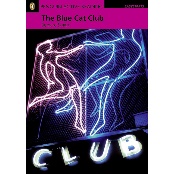 James and Chantal are enjoying an evening of magic at the Blue Cat Club. Merlin the magician is clever and his tricks are exciting – but are they dangerous too?
 -
 Common to all matter and its smallest and most fundamental unit, the atom determines the properties of a substance and how it responds to other materials and stimuli. Dividing the atom further reveals several smaller particles whose activity forms the heart of nuclear physics. Readers will discover the structure of the atom as well as the ways in which its electrons, protons, and neutrons facilitate both radioactivity and nuclear reactions, both of which have been crucial to technological advancements since the 20th century.
 -
 Photographs and text depict information about the largest drilling rig, including its location, how it was built, and the way it is kept running.
 -
 Presents information about the endocrine system, including what it is, conditions and diseases associated with it, how endocrine problems are diagnosed and treated, how to maintain a healthy endocrine system, and ways of coping with endocrine problems.
 -
 Disscusses in simple terms, the Itaipu dam, including where it is located, how it was built, and how it provides electricity.
 -
 Discusses the world's largest soccer stadium, including where it is located and how it was built.
 -
 Presents information on the tallest buildings in the world, including their size and how they were built.
 -
 The world's largest desert is almost the same size as the United States! Student will marvel at the immensity of this desert while learning many other facts about this natural wonder.
 -
 At 33 miles long, the Seikan Railroad Tunnel is the world's longest tunnel. From its beginning to its completion, the story of this Japanese tunnel will fascinate even the most reluctant readers.
 -
 Describes the space shuttle, including lift-off, landing, working in space, and the crew.
 -
 Did you know that the first basketball hoop was made from a peach basket? This book starts with basketball's humble beginnings and travels through its history to how the game is played today.
 -
 The first skaters lived more than 10,000 years ago! Since then, figure skating has become a very exciting and beautiful sport. Students will learn all about the history of the sport in this intriguing book.
 -
 Presents information, in a question and answer format, about the customs, habits, and habitats of people from different countries around the world with emphasis on what makes their cultures unique.

