-
 Kids will learn all about heat through these fun and easy-to-follow experiments.
 -
 Kids will learn all about light and sound through these fun and easy-to-follow experiments.
 -
 Kids will learn all about plants through these fun and easy-to-follow experiments.
 -
 Kids will learn all about solids, liquids and gases through these fun and easy-to-follow experiments.
 -
 Aircraft carriers are truly the fortresses of the sea! Students will get an inside-out view of these incredible floating cities, from how they are constructed to how they function as important parts of a country's defense. Students also will learn about the various aircraft that are on board and the crew that keeps aircraft carriers in ship shape!
 -
 Your readers will get a close look at planes such as the Airbus A380, which is the world's largest airliner, and the Lockheed Martin F-35B, which is a short take-off and vertical landing combat aircraft. Readers learn about the engine and design that make flight possible for each aircraft.
 -
 In 1878 in Denison, Texas, a man named John Martin looked up into the sky and saw something he could not explain. Americans have been hooked on the possibility of beings from space visiting Earth ever since. A sense of wonder, and reality, are brought to some popular legends of alien encounters and sightings in this volume. The final chapter explores how these legends have become even more popular thanks to movies, television, and literature.
 -
 This fascinating book explores the history and work of astronauts, the rigors of astronaut training, and what it is like to live and work in space. Brief bios on our most famous astronauts are also included.
 -
 This colorful book explores the history and function of satellites and how they have helped scientists explore outerspace. Readers will also learn that we rely on satellites for communications, mapping, and many other things.
 -
 Your curious readers will learn that going into space is no small endeavor. This book explains the history and function of space missions and how they have expanded our knowledge of the universe.
 -
 Bundle up for a fact-finding mission to the Arctic. Readers will learn about Arctic plants and animals, and how they depend on each other for survival in the coldest ecosystem on Earth.
 -
 Venezuela's Angel Falls is 16 times higher than Niagara Falls! Angel Falls will capture young readers' attention with its unique history and dizzying heights.
 -
 Because of the biological similarities between many animals and humans, scientists can learn about diseases, and find out how humans might react to medicines, cosmetics, chemicals, and other products by testing them on animals first. According to the Humane Society of the United States, more than twenty-five million animals are used in research, testing, and education each year. Readers learn about the various philosophies on animal testing, what tests are used, and how they are performed. The book presents the pros and cons of animal testing and some of the alternative methods to animal testing that scientists are developing today.
 -
 Imagine being in a place where the temperature can drop to -125 degrees Fahrenheit! That's how cold it can get on the world's biggest glacier. Students will be transported to the icy chill of Antarctica in this cool book.
 -
 Artificial Intelligence is one of the most intriguing and difficult technological advances ever explored by man. It is the study of intelligent behavior and the attempt to recreate it through technology. This beginner's guide explores, not only the technology behind AI, but the current and future benefits of further exploration.
 -
 The largest continent in the world also has the largest variety of people, land, and animals of any continent on Earth. Students will be delighted with the beautiful images as they read about this bountiful continent.
 -
 SIN DESCRIPCION
 -
 As the world's population expands, so too does the risk of communicable disease and global pandemics. Consequently, healthcare has assumed a greater centrality in the public consciousness both in the United States and around the world. With various national and international organizations dedicated to epidemiological research and disease control, societal welfare has become an increasingly significant aspect of public policy. The historical, legal, and scientific factors that form the basis of public health locally and globally are the subjects of this relevant and revealing volume.
 -
 The detailed illustrations and photographs in this fascinating book take us into the complicated, hectic world of the beehive, where we observe the rigidly structured "class system" of the honeybee, with its worker bees, drones, and queen. The complex body and internal systems of the bee are examined, as the history, honey production, construction of the honeycomb, reproduction, and colony building are discussed.
 -
 Did you know that riders had to use stepstools to get onto the first bikes? Bicycles were once regarded as a nuisance to horses. Read about how they've become a significant part of our lives.
 -
 This book explains the latest scientific thought behind biodiversity and why a variety of species on our planet is essential. Further, the author explains recent efforts to preserve our world by curbing global warming.
 -
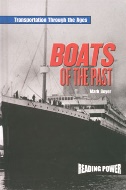 Humans have used boats for hundreds of years. See how boats have changed into the mighty ocean-going vessels we use today.
 -
 Imagine traveling at half the speed of a jet plane without ever leaving the ground! Students will discover the technology that makes such speeds possible, from special tracks and safety precautions to aerodynamically designed trains. What are the limits to the speed of trains? What imposes those limits? Students also will read about the future of passenger train travel, from flying trains to trains that use huge magnets to levitate inches or centimeters off the track. Some trains safely reach speeds of more than 200 mph!
 -
Sale!
 PROMOEl turismo y el medio ambiente representan actualmente un binomio cada vez más importante en las sociedades modernas, lo que se traduce en un mayor número de estudios enfocados en el análisis simultáneo de ambos sustantivos. Turismo y medio ambiente son dos campos de estudio que, desde la perspectiva de la sociología como es el caso de este trabajo científico, tiene en común su relativa juventud como materias de investigación académica. Así, el crecimiento de la actividad turística y la creciente sensibilidad por daños problemas ambientales, da lugar un nuevo perfil de turista que debe ser estudiado en mayor profundidad y con mayor regularidad. En este sentido, la tendencia de estos estudios parece dirigirse en los últimos tiempos hacia aspectos más cualitativos y no tanto cuantitativos: el hecho clave es ahora la orientación de la planificación estratégica del turismo y del medio ambiente hacia parámetros más cualitativos, que tiene al desarrollo económico y social sobre la base del equilibrio ambiental…
 -
 La constante evolución social, y singularmente la evolución tecnológica, requieren del ordenamiento jurídico europeo una permanente esfuerzo de adecuación y de reactulización jurídica. Esta circunstancia se ratifica en la importancia que adquieren en la actualidad el estudio del derecho a la vida privada y a la protección de datos de carácter personal como derechos fundamentales. Si históricamente han existido exponentes de desarrollo como los económicos, sociales, industriales, de potencia militar, entre otros, en la actualidad, un elemento de referencia del desarrollo y la evolución social es sin duda el nivel de reconocimiento y garantía de los derechos y libertades, y singularmente aquellos que tienen una directa relación con la evolución tecnológica.
 -
 El presente libro es una recopilación e todo los Convenios de Seguridad Social que España ha suscrito bilateralmente hasta la fecha on otros países, resumiendo sus características comunes y aportando sus diferencias, tanto es sus aspectos estructurales como n las cuestiones concretas que regulan, exponiendo, además, las problemática derivada de su incidencia dentro del derecho comunitario, en aras, sobre todo, a poder determinar cuál es la disposición legal aplicable en los casos, demasiado frecuentes, de colisión entre diversas normas, convencionales o no, aportando así, sobre todo a los operadores jurídicos, un instrumento que les permita determinar cómo han de ejercer sus derechos sociales es esta materia los trabajadores de sus países de origen.
 -
 Sale a la luz por primera vez este Manual de Derecho Civil. Parte generalt para cuya redacci¢n he contado con la colaboraci¢n del Dr. Alberto Serrano Molina. Condesa casi dos d‚cadas de docencia y en algunos temas aporta frutos directos de la investigaci¢n realizada. ¨Por qu‚ un nuevo Manual existiendo magn¡ficas obras de reconocidos profesionales en el mercado? Por dos razones: una de car cter docente, y otra, m s acad‚mica. En efecto, esta obra ha sido concebida, en primer lugar, como instrumento docente; segundo, plantear y discutir las cuestiones problem ticas, descendiendo, en lo posible, a sus consecuencias pr cticas, porque el derecho es ciencia y t‚cnica (para los cl sicos, arte) y ‚sta, supuesta aqu‚lla, s¢lo se adquiere con la experiencia y la pr ctica. En este contexto es en el que se inserta el Manual; con ‚l se pretende facilitar al alumno una informaci¢n completa y ordenada de los temas de propaganda de Derecho Civil que le permita reducir el tiempo de dedicado a la recopilaci¢n de la misma para centrarse m s en la reflexi¢n y asimilaci¢n de los conceptos y de sus implicaciones pr cticas. En este £ltimo aspecto, la funcionalidad docente es complementada por ‚l; Practicum de Derecho Civil. Parte general, obra del Dr. Alberto Serrano Molina y m¡a, en el que se proponen un conjunto de ejercicios, actividades y lecturas con la finalidad de que el alumno haga pr ctico su saber te¢rico.
 -
 Muchas partes de las ciencias y la ingeniería (electromagnetismo, mecánica de fluidos, resistencia de materiales, etc.…) tienes grandes cosas en común, una de ellas es que las ecuaciones que expresan algunas de sus leyes básicas son desde un punto de vista formal idénticas. Esto invita a estudiar a fondo la metodología más adecuada para su resolución y por tanto a que los estudiantes de ciencias e ingeniería tengan una forma de abordar la resolución de estas ecuaciones. Es por ello que el texto que aquí se presenta va claramente destinado a estudiantes de ciencias e ingeniería que quieren aprender a resolver problemas básicos de electromagnetismo e incluso de otras disciplinas cuyos comportamientos matemáticos nos lleven a ecuaciones diferenciales en derivadas parciales de tipo elíptico. Este tipo de ecuaciones tiene una generalidad y un protagonismo suficiente como para que le dediquemos un texto como éste.
 -
 La importancia de la obra reside en la conveniencia, hoy día, de elaborar una nueva Moral Internacional, dada su estrecha relación con las múltiples y actuales monografías relativas al Derecho Internacional y a las Organizaciones Internacionales así como a las Relaciones Internacionales (Teoría y Realidad), que en contraste se publican en una incesante y continua actualización. La obra se estructura en cuatro partes: Las bases doctrinales de la Moral Internacional; Hacia la comunidad humana mundial; La moral de la paz y de la guerra; y La moral internacional de los pueblos en vías de desarrollo. Carlos Corral Salvador es Doctor en Derecho (Universidad Complutense de Madrid) y Doctor en Derecho Canónico (Pontificia Università Gregoriana). Ha ejercido la docencia desde 1960. Primero, en la Universidad Pontificia Comillas de Madrid hasta 1999 como Catedrático de “Derecho Público Eclesiástico y Relaciones de la Iglesia y el Estado”; y, después al tiempo, en la Universidad Complutense de Madrid como Profesor de la Facultad de Ciencias Políticas y Sociología (Departamento de Relaciones Internacionales) hasta 2004. Entre sus libros destacan Derecho Eclesiástico Internacional (2012), Derecho internacional Concordatario (2009), Confesiones religiosas y Estado Español (2007), La relación entre la Iglesia y la Comunidad Política (2003) y Acuerdos España Santa Sede (1999).
 -
 A medida que pasa el tiempo, se abren nuevos campos de análisis jurídico en el ámbito de la protección medioambiental. Uno de estos nuevos campos se relaciona con la protección de la atmósfera. Junto a formas de contaminación "tradicionales" (esto es, la expulsión a la atmósfera de partículas de diversa naturaleza), hay otras formas de contaminación a las que se viene prestando mayor atención últimamente, muy notablemente el ruido (área en la que ya hay mucha experiencia), pero también las referidas a olores, radiaciones o luz. Este hecho es lo que da especial valor a esta obra, donde especialistas de los diversos campos del Derecho tratan sobre las nuevas formas de contaminación atmosférica, desde una introducción general, hasta unos estudios centrados en la regulación administrativa, penal, civil y tributaria en materia de las nuevas formas de contaminación atmosférica que se han identificado. Se trata pues de una obra que dará al lector idea completa del régimen jurídico de las nuevas formas de contaminación atmosférica, escrita por especialistas en las distintas materias, lo que garantiza un análisis riguroso y pormenorizado de todos sus aspectos.
