-
 In 1878 in Denison, Texas, a man named John Martin looked up into the sky and saw something he could not explain. Americans have been hooked on the possibility of beings from space visiting Earth ever since. A sense of wonder, and reality, are brought to some popular legends of alien encounters and sightings in this volume. The final chapter explores how these legends have become even more popular thanks to movies, television, and literature.
 -
 Your curious readers will learn that going into space is no small endeavor. This book explains the history and function of space missions and how they have expanded our knowledge of the universe.
 -
 Venezuela's Angel Falls is 16 times higher than Niagara Falls! Angel Falls will capture young readers' attention with its unique history and dizzying heights.
 -
 Imagine being in a place where the temperature can drop to -125 degrees Fahrenheit! That's how cold it can get on the world's biggest glacier. Students will be transported to the icy chill of Antarctica in this cool book.
 -
 The largest continent in the world also has the largest variety of people, land, and animals of any continent on Earth. Students will be delighted with the beautiful images as they read about this bountiful continent.
 -
 The detailed illustrations and photographs in this fascinating book take us into the complicated, hectic world of the beehive, where we observe the rigidly structured "class system" of the honeybee, with its worker bees, drones, and queen. The complex body and internal systems of the bee are examined, as the history, honey production, construction of the honeycomb, reproduction, and colony building are discussed.
 -
 Did you know that riders had to use stepstools to get onto the first bikes? Bicycles were once regarded as a nuisance to horses. Read about how they've become a significant part of our lives.
 -
 This book explains the latest scientific thought behind biodiversity and why a variety of species on our planet is essential. Further, the author explains recent efforts to preserve our world by curbing global warming.
 -
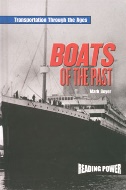 Humans have used boats for hundreds of years. See how boats have changed into the mighty ocean-going vessels we use today.
 -
Sin stock
 Luis loves to read, but soon his house in Colombia is so full of books there's barely room for the family. What to do? Then he comes up with the perfect solution: a traveling library! He buys two donkeys, Alfa and Beto, and travels with them throughout the land, bringing books and reading to the children in faraway villages. Beautiful!
 -
 Imagine traveling at half the speed of a jet plane without ever leaving the ground! Students will discover the technology that makes such speeds possible, from special tracks and safety precautions to aerodynamically designed trains. What are the limits to the speed of trains? What imposes those limits? Students also will read about the future of passenger train travel, from flying trains to trains that use huge magnets to levitate inches or centimeters off the track. Some trains safely reach speeds of more than 200 mph!
 -
 When Henry Ford put an engine on a horse carriage, he had no idea that his simple invention would revolutionize the world. Read about how an everyday part of our lives started with a single, simple concept.
 -
 Kids will learn all about heat through these fun and easy-to-follow experiments.
 -
 Kids will learn all about plants through these fun and easy-to-follow experiments.
 -
 Some of the most famous animals in history have been horses. From George Washingtons trusty Arabian, Magnolia, to the fictional stallion Black Beauty, horses have played an important part in historical events, books, television shows, and movies for many years. Readers will discover important facts about some of the worlds most important and beloved horses. Photographs of the horses and their owners help illustrate these amazing and beautiful animals.
 -
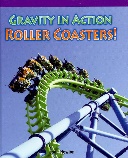 Nothing can capture attention like the thrill and rush of roller coasters. Your students will learn how the force of gravity makes their favorite roaring rollers move.
 -
 Great Expectations is Charles Dickens's thirteenth novel. It is his second novel, after David Copperfield, to be fully narrated in the first person. Great Expectations is a bildungsroman, or a coming-of-age novel, and it is a classic work of Victorian literature. It depicts the growth and personal development of an orphan named Pip. The novel was first published in serial form in Dickens's weekly periodical All the Year Round, from 1 December 1860 to August 1861. In October 1861, Chapman and Hall published the novel in three volumes.Dickens originally intended Great Expectations to be twice as long, but constraints imposed by the management of All the Year Round limited the novel's length. The novel is collected and dense, with a conciseness unusual for Dickens. According to G. K. Chesterton, Dickens penned Great Expectations in "the afternoon of [his] life and fame." It was the penultimate novel Dickens completed, preceding Our Mutual Friend.It is set among the marshes of Kent and in London in the early to mid-1800s. The novel contains some of Dickens most memorable scenes, including its opening, in a graveyard, when the young orphan Pip is accosted by the escaped convict, Abel Magwitch. Great Expectations is a graphic book, full of extreme imagery, poverty, prison ships ("the hulks"), barriers and chains, and fights to the death.Upon its release, Thomas Carlyle spoke of "All that Pip's nonsense." Later, George Bernard Shaw praised the novel as "All of one piece and consistently truthfull." Dickens felt Great Expectations was his best work, calling it "a very fine idea," and was very sensitive to compliments from his friends: "Bulwer, who has been, as I think you know, extraordinarily taken by the book."Great Expectations has a colourful cast that has entered popular culture: the capricious Miss Havisham, the cold and beautiful Estella, Joe the kind and generous blacksmith, the dry and sycophantic Uncle Pumblechook, Mr. Jaggers, Wemmick with his dual personality, and the eloquent and wise friend, Herbert Pocket. Throughout the narrative, typical Dickensian themes emerge: wealth and poverty, love and rejection, and the eventual triumph of good over evil. Great Expectations has become very popular and is now taught as a classic in many English classes. It has been translated into many languages and adapted many times in film and other media.
 -
 Greenland is more than 84, square miles. The worlds largest island also has many other extraordinary qualities that make learning about this island fun and exciting. The unique way of life in Greenland as well as the variety of animals on the island will fascinate young readers.
 -
 Describes globalization, including how it works, its positive and negative effects, and its relationship with world immigration.
 -
 Describes what it is like to be a race car driver, discussing different types of races, pit stops, race car safety, meeting fans, doing charity work, and the Daytona 500.
 -
 SIN DESCRIPCION
 -
 Looks at the life and racing career of NASCAR driver Juan Pablo Montoya.
 -
 This book gives students an in-depth look at how large telescopes work. The wonder and awe of space and the scientific instruments we use to study it both come shining through in this fascinating book. Full-color diagrams and illustrations will help students visualize how the technology of telescopes works. Students will learn about the creation of mirrors 26.2 feet wide and telescope teams that work together to create a telescope as powerful as if it had a mirror the size of Earth!
 -
Sin stock
 The Oxford Learner's Pocket Dictionary has over 38,000 words, phrases, and meanings giving students a handy quick-reference guide to basic English vocabulary. It includes essential information on meanings, grammar patterns, spelling, idioms, and phrasal verbs.
 -
 Introduces the history of puppets and provides instructions for making eight different types of puppets out of easily available materials.
 -
 Presents instructions for creating several styles of handbags, carrying cases, and wallets from common craft materials.
 -
 SIN DESCRIPCION
 -
 Presents the history of the motorcycle and the many improvements that have occured.
 -
 Discusses nuclear submarines, including their equipment, how they are run, and what they are used for.
 -
 Describes the history of olive trees and the structure, cultivation, and use of olives.
 -
 Beautifully illustrated picture books give you a look at our world from a small child's point of view.
 -
 Open a world of possible, real stories about the joy and power of reading.
 -
Sale!
 PROMOPHAIDON DESIGN CLASSICS is the first comprehensive and authoritative collection of classic design objects. This beautifully illustrated three-volume set of books presents 999 industrially manufactured products, carefully selected by a group of experts. It is the first definitive illustrated sourcebook on the evolution of design to include such a wide scope of objects in detail. From cars to furniture, from tableware to cameras, from everyday objects to airplanes, this breadth of design has never before been collected in such a way before. PHAIDON DESIGN CLASSICS tells the story of design’s evolution around the world from the late 1600's to the present, bringing together patents, prototypes, old advertisements, original drawings, images showing the process of manufacturing, as well as rare archival photographs. The anthology features an astonishing 4,000 images. The objects are presented chronologically, beginning with an elegant pair of Chinese bonsai scissors from the early 1600s, still in production today, and ending with Barber Osgerby’s Lunar bath accessories, destined to become a classic. Glancing through the volumes, the reader will gain an understanding not only of the history of design, but a history of taste and culture. The book is an extraordinary journey through the objects that have shaped our society, from the first attempts to combine function and beauty in the nineteenth century, through the machine aesthetics of the thirties, the advent of plastic and other new materials in the fifties and sixties, up to the classics-to-be of the last ten years.
 -
 SIN DESCRIPCION
 -
 Charles Hatfield Baker III, one of the richest men in New York City, suddenly disappears. His daughter, Julia, wants to find him. The directors of his company want power and money. Do they know where he is? And what is Project Omega? Can Julia find her father and save his company?
 -
 Describes the design, construction, and operation of famous skyscrapers.
 -
 This book will give students an understanding of the history of flight right up to the technology and scientific discoveries that allow us to fly planes as large as todays super jumbo jets. How are airplanes designed so they can operate safely? What is the future of flight? All of these questions and more will be answered as students take a look at super jumbo jets, inside and out!
 -
 Discusses supersonic jets, including how they are built, different types, and what they are used for.
 -
Sin stock
 Launching a major new research project examining the principles of succession law in comparative perspective, this book discusses the formalities which the law imposes in order for a person to make a testamentary disposal of property. Among the questions considered are the following. How are wills made? What precisely are the rules - as to the signature of the testator, the use of witnesses, the need for a notary public or lawyer, and so on? Is there is a choice of will-type and, if so, which type is used most often and what are the advantages and disadvantages of each? How common is will-making or do most people die intestate? What happens if formalities are not observed? How can requirements of form be explained and justified? How did the law develop historically, what is the state of the law today, and what are the prospects for the future? The focus is on Europe, and on countries which have been influenced by the European experience. Thus in addition to giving a detailed treatment of the law in Austria, Belgium, England and Wales, France, Germany, Hungary, Italy, the Netherlands, Poland, and Spain, the book explores legal developments in Australia, New Zealand, the United States of America, and in some of the countries of Latin America with a particular emphasis on Brazil. It also includes chapters on two of the mixed jurisdictions - Scotland and South Africa - and on Islamic Law. The book opens with chapters on Roman law and on the early modern law in Europe, thus setting the historical scene as well as anticipating and complementing the accounts of national history which appear in subsequent chapters; and it concludes with an assessment of the overall development of the law in the countries surveyed, and with some wider reflections on the nature and purpose of testamentary formalities.
 -
 Photographs and text reveal information about the longest bridge in the world, including its location, how it was built, and the safety issues involved in its upkeep.
 -
 Classic / British English Are you brave enough to read four of Poe's famous horror stories? Edgar Allan Poe wrote strange stories about terrible people and evil crimes. Don't read this book late at night!
 -
 James and Chantal are enjoying an evening of magic at the Blue Cat Club. Merlin the magician is clever and his tricks are exciting – but are they dangerous too?
 -
 Common to all matter and its smallest and most fundamental unit, the atom determines the properties of a substance and how it responds to other materials and stimuli. Dividing the atom further reveals several smaller particles whose activity forms the heart of nuclear physics. Readers will discover the structure of the atom as well as the ways in which its electrons, protons, and neutrons facilitate both radioactivity and nuclear reactions, both of which have been crucial to technological advancements since the 20th century.
 -
 Photographs and text depict information about the largest drilling rig, including its location, how it was built, and the way it is kept running.
 -
 Presents information about the endocrine system, including what it is, conditions and diseases associated with it, how endocrine problems are diagnosed and treated, how to maintain a healthy endocrine system, and ways of coping with endocrine problems.
 -
 Disscusses in simple terms, the Itaipu dam, including where it is located, how it was built, and how it provides electricity.
 -
 Discusses the world's largest soccer stadium, including where it is located and how it was built.
 -
 Presents information on the tallest buildings in the world, including their size and how they were built.
 -
 The world's largest desert is almost the same size as the United States! Student will marvel at the immensity of this desert while learning many other facts about this natural wonder.
 -
 At 33 miles long, the Seikan Railroad Tunnel is the world's longest tunnel. From its beginning to its completion, the story of this Japanese tunnel will fascinate even the most reluctant readers.
 -
 Describes the space shuttle, including lift-off, landing, working in space, and the crew.
 -
 Did you know that the first basketball hoop was made from a peach basket? This book starts with basketball's humble beginnings and travels through its history to how the game is played today.
 -
 The first skaters lived more than 10,000 years ago! Since then, figure skating has become a very exciting and beautiful sport. Students will learn all about the history of the sport in this intriguing book.
 -
 Presents information, in a question and answer format, about the customs, habits, and habitats of people from different countries around the world with emphasis on what makes their cultures unique.


